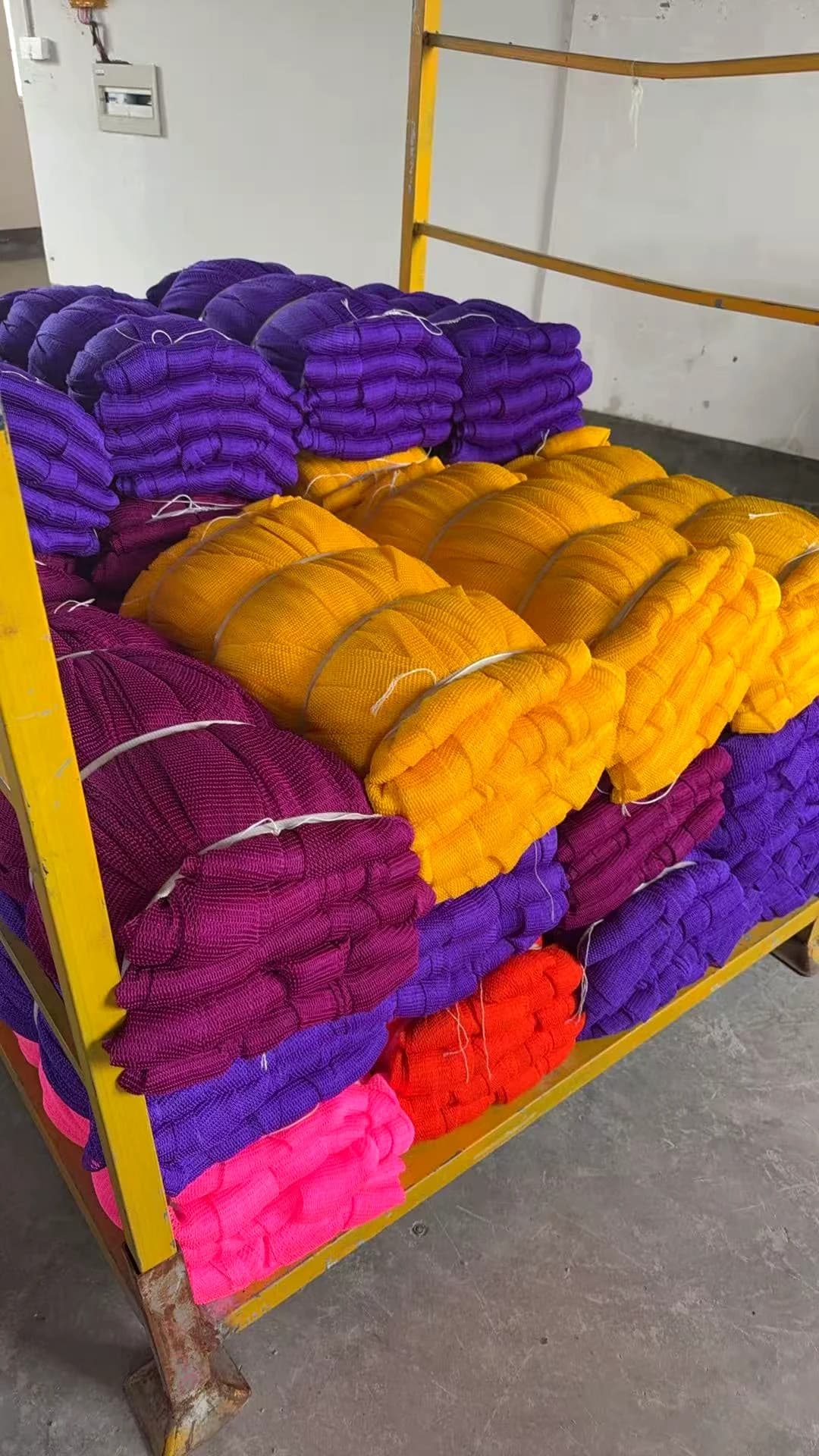
Private-label African net sponge projects involve more than placing a logo on a bag. The buyer must define the saleable unit, product variant, label information, artwork ownership, barcode, packing material, inner quantity and shipping carton. Each decision can affect sampling, production planning, minimum quantities, packed dimensions and total landed cost.
This guide gives importers, distributors, beauty-supply brands and online retailers a practical packaging workflow. Bulk packaging, individual packaging, labels or stickers, and customized packaging are confirmed areas for review. The exact packaging material, printing process, component minimum and price still require project confirmation. For the broader product decision, see the African Net Sponge Wholesale Buying Guide.
OEM and Private Label Are Related but Not Identical
OEM generally refers to producing an item to an agreed buyer specification. The specification may cover material, mesh construction, dimensions, color, end treatment and packing. Private label focuses on presenting that product under the buyer’s brand through labels, artwork and retail packaging.
A project can involve OEM without private-label retail packaging—for example, a custom-size finished net shipped in neutral bulk packs. It can also use a standard product format with customized labels. Buyers should separate product customization from packaging customization in the RFQ so feasibility, samples and costs can be reviewed independently.
The African Net Sponge product page currently describes private-label requirements as subject to confirmation. This avoids implying that every artwork, material or print method is automatically available.
Define the Saleable Unit First
Before discussing artwork, decide what the customer will buy.
- One finished sponge in one retail pack
- Multiple finished sponges in a set
- Finished units supplied in bulk for local packing
- Uncut bath-net mesh rolls for local conversion
- A roll or material pack sold to a processor rather than a consumer
The saleable unit controls label dimensions, barcode assignment, quantity statements, carton counts and fulfillment handling. A package designed for one compact finished piece may not suit a multi-piece set or an uncut roll.
The confirmed product MOQ is 1,000 pieces for finished African net sponges and one roll for uncut mesh rolls. These product minimums do not guarantee that every customized bag, printed label or artwork version is available at the same quantity. Packaging suppliers may impose separate component minimums.
Finished Products and Mesh Rolls Need Different Packaging Plans
| Planning point | Finished African net sponge | Uncut bath-net mesh roll |
|---|---|---|
| Primary identification | Product name, color/SKU, unit or set quantity | Material/roll reference, color, quantity basis and roll ID |
| Inner presentation | Individual or grouped packing, subject to confirmation | Wrapping or protection suitable for the confirmed roll format |
| Buyer’s downstream work | Distribution, fulfillment or retail display | Cutting, finishing, unit inspection and retail packing |
| Artwork priority | Consumer-facing brand and required product information | Operational identification and buyer/process information |
| Approval sample | Finished product in proposed pack | Roll/material sample plus proposed identification and protection |
| Shipping concern | Unit protection, pack consistency and carton count | Roll handling, identification and protection in storage/transit |
Do not use a finished-piece packaging quotation as the basis for roll supply. The labor, materials, dimensions and commercial unit differ.
Brand Labels and Product Information
A buyer should prepare a packaging information sheet, not just a logo file. Depending on the destination market and sales channel, it may include:
- Brand name and approved logo
- Product name and variant description
- Color or SKU code
- Quantity statement
- Material declaration after confirmation
- Country-of-origin wording reviewed by the buyer
- Importer or responsible-business information where required
- Barcode type and verified barcode data
- Lot, batch or production reference if agreed
- Care, warning or disposal text supplied or legally reviewed by the buyer
- Required languages
- Artwork version and approval date
FishingNetPro should not invent regulatory text for the buyer’s destination. The importer or brand is responsible for identifying applicable labeling requirements and supplying approved content. The manufacturing partner then confirms whether the requested label and placement are feasible.
Retail Bags, Inserts and Color Printing
Buyers may request a retail bag, printed insert, sticker, hang tag or another presentation. Availability depends on the current manufacturing and packaging supply chain. A request should specify the desired format, dimensions, material preference, print coverage, number of colors, finish, opening or closure, and packing sequence.
Do not assume that “custom bag” defines the material or printing process. Ask the supplier to state the proposed construction in the quotation or sample record. If the packaging must meet a particular recycling, chemical or retailer policy, provide the requirement and request supporting evidence for the exact material.
Color accuracy also needs a reference. Screenshots and uncalibrated displays are unreliable approval tools. Supply a recognized color reference or physical standard where exact brand color matters, then agree what form of proof or sample will be reviewed.
Build a Manageable SKU Plan
Every combination of product color, size, set quantity, artwork language and package format can become a separate SKU. Too many launch variants can fragment both product and packaging quantities.
| Decision | Example planning question | Commercial impact to confirm |
|---|---|---|
| Product color | Which colors are essential for launch? | Quantity split and product feasibility by color |
| Size or finished format | Is one size sufficient for the first order? | Separate product specifications and samples |
| Pack quantity | Single unit or multipack? | Bag dimensions, label text and carton count |
| Artwork language | One multilingual version or market-specific versions? | Number of print versions and approval files |
| Sales channel | Wholesale carton, retail shelf or ecommerce fulfillment? | Protection, dimensions and labeling needs |
| Barcode | One code per variant? | Artwork data control and SKU traceability |
A smaller, controlled launch range can make approval and inventory management easier, but it does not guarantee a lower MOQ. Product and packaging minimums still depend on the confirmed specification and supplier feasibility.
What Affects Packaging MOQ and Cost?
The base product minimums are confirmed—1,000 pieces for finished products and one roll for mesh rolls—but there is no responsible universal MOQ or fixed printing charge for every private-label packaging configuration. The packaging requirement may be affected by:
- Number of product and artwork variants
- Packaging format and dimensions
- Requested material and thickness
- Printing method and print coverage
- Number of print colors
- Labels, inserts, stickers or tags
- Barcode or variable-data requirements
- Sample or proof process
- Product quantity per pack
- Inner-pack and outer-carton configuration
- Whether packaging components have supplier minimums separate from the product
- Whether unused packaging remains after the production run
Ask for the applicable minimum by exact SKU and packaging version. Do not assume that several colors or language versions can always be combined to meet one minimum. Any mixed-SKU arrangement is subject to production and packaging feasibility.
Confirmed product colors include red, yellow, blue, purple, pink, green and black, with other requested colors subject to confirmation. Each material, size, color and packaging combination should be assessed as a possible SKU rather than assumed to share one production or packaging minimum.
Planning a Small Market Test
A buyer testing a new market should reduce avoidable complexity before asking for an artificially small custom-packaging run.
- Select the smallest commercially useful range of product colors and formats.
- Decide whether neutral bulk supply with local labels is an acceptable test route.
- Use one artwork version where legally and commercially suitable.
- Confirm whether a digital proof, packaging mock-up or physical sample is needed.
- Separate product MOQ from printed-packaging MOQ.
- Calculate the cost of leftover packaging if the print minimum exceeds the product quantity.
- Define how unused buyer-owned packaging will be stored, returned or handled, if applicable.
- Approve the complete saleable unit before bulk production.
Local packing can offer flexibility, but it transfers labor, inspection, compliance and inventory responsibilities to the buyer. Compare the complete operational cost rather than only the factory unit price.
Packaging Approval Workflow
1. Confirm the product
Approve the material, mesh construction, finished dimensions, color and end treatment before finalizing packaging dimensions. The separate African Net Sponge Materials and Quality Guide is intended to support this review once published.
2. Issue controlled artwork
Provide editable or print-ready files in the format requested by the packaging supplier. Assign an artwork code, revision number and date. Identify the approved barcode data separately rather than relying on a visual copy from an old package.
3. Review a proof or mock-up
Check spelling, language, logo, color reference, barcode data, quantity statement, dimensions and placement. A digital proof can verify layout but may not establish final material, print color or physical fit.
4. Review the packed sample
Where required, approve a representative product inside the proposed package. Check fit, closure, appearance, labels and any risk of the product being compressed or presented inconsistently.
5. Freeze the specification
Record the approved product sample, packaging material, dimensions, artwork revision, packing sequence, inner quantity, carton count and inspection points. Any later change should be documented and reviewed for sample, cost and schedule impact.
Private-Label RFQ Checklist
- Finished sponge or uncut mesh roll
- Product specification and approved reference sample
- Color and order quantity by SKU
- Single unit, set or bulk packing
- Requested packaging format and dimensions
- Packaging material preference, subject to confirmation
- Logo and controlled artwork files
- Label, insert, sticker or tag requirements
- Barcode type and verified data
- Languages and buyer-approved regulatory text
- Inner-pack quantity and outer-carton requirement
- Destination and sales channel
- Proof, mock-up and packed-sample requirements
- Requested MOQ by exact SKU
- Treatment of unused printed packaging, if applicable
Send the checklist through the Request Quote page with reference photographs and artwork where available.
Frequently Asked Questions
What is the difference between OEM and private label?
OEM concerns producing the product to an agreed buyer specification. Private label concerns selling the product under the buyer’s brand through labels and packaging. A project can include either or both.
Can African net sponges use custom retail bags?
A requested bag format can be reviewed, but availability, material, printing and minimum quantities require confirmation. Do not treat a custom bag as approved until it appears in the quotation and sample record.
Does every color require a separate SKU?
That depends on the buyer’s inventory and barcode system. Different colors commonly need clear identification, but the final SKU structure is a commercial decision for the buyer.
What determines private-label packaging MOQ?
Finished African net sponges have a confirmed starting MOQ of 1,000 pieces, while uncut mesh rolls start from one roll. Custom bags, labels, stickers or other components may have separate minimums based on construction, dimensions, print method, artwork versions and component suppliers.
Can several colors share one packaging design?
They may be able to share a design if the product identification remains accurate and the packaging workflow supports it. Product color quantities and any variable labels still require confirmation.
Can a buyer start with a small test order?
Submit the target quantity and simplified SKU plan for review. Neutral bulk packing or local labeling may be worth comparing, but no small-order route should be promised before product and packaging feasibility are confirmed.
Who is responsible for packaging compliance?
The importer or brand should identify the legal and retailer requirements for the destination market and provide approved text and data. The supplier confirms production feasibility for the requested packaging.
Prepare a Private-Label Inquiry
Send the product reference, SKU plan, artwork, barcode data, packaging concept, quantity by variant and destination. FishingNetPro can coordinate a feasibility review with the manufacturing partner without treating unconfirmed packaging options as standard capabilities.
Review African Net Sponge supply formats or send your private-label requirements.