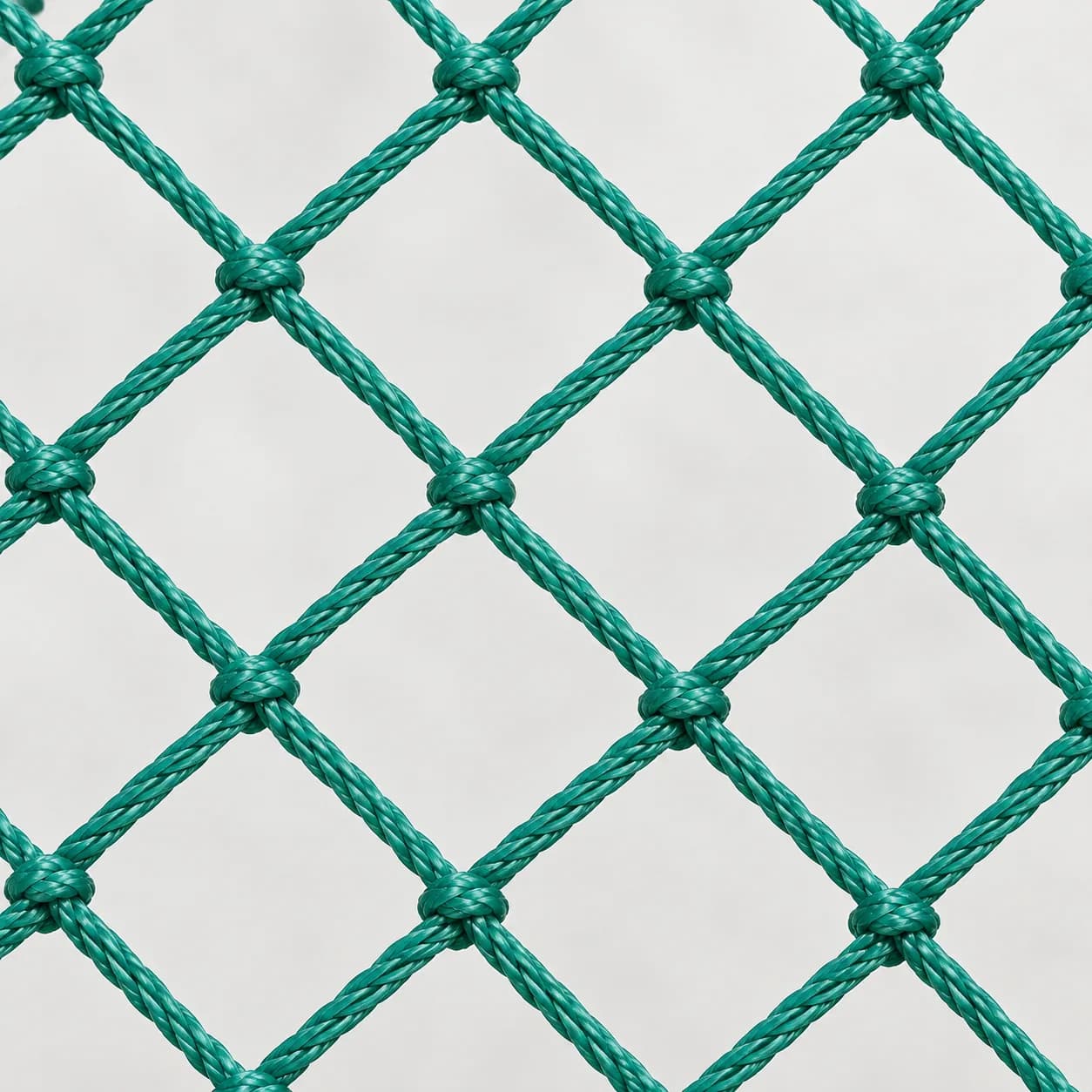
Choosing the right fishing net mesh size is one of the most important decisions when sourcing commercial fishing nets.
Mesh size affects more than the size of fish that can be caught. It can also influence net selectivity, water resistance, net weight, fishing efficiency and the overall performance of the finished net.
For importers, distributors and commercial fishing operators, mesh size should therefore never be selected in isolation.
The correct specification normally depends on the target fish species, average fish size, fishing method, twine construction, net depth, net length and local fishing regulations.
This guide explains the main factors buyers should consider when selecting fishing net mesh size and how mesh size works together with other net specifications.
Mesh Measurement Overview
Stretched Mesh
The opening measured with the mesh extended according to the agreed method.
Square Mesh
The opening described across the square form of the mesh.
Bar Length
One side of the mesh measured between the agreed reference points.
What Is Fishing Net Mesh Size?
Fishing net mesh size refers to the dimensions of the openings formed by the netting.
These openings are created by intersecting twines and may be diamond-shaped or square-shaped depending on the construction and application.
However, buyers should be careful because mesh size can be measured in different ways.
Some suppliers describe mesh according to the distance between knots, while others may refer to stretched mesh measurements.
This means that two suppliers using the same number may not always be referring to exactly the same measurement method.
Before placing an order, buyers should therefore confirm:
- how the mesh is measured
- whether the specification refers to stretched mesh
- whether measurements are taken knot-to-knot
- whether the dimensions are stated in inches or millimeters
Clear measurement standards help avoid misunderstandings during sampling and mass production.
Why Fishing Net Mesh Size Matters
Mesh size directly affects how a fishing net performs in the water.
Catch Selectivity
Smaller mesh openings can retain smaller fish, while larger openings allow smaller fish to pass through more easily.
For many commercial fishing applications, selecting a suitable mesh size helps target a specific size range rather than catching everything that enters the net.
Water Resistance
A fishing net with very small openings generally creates more resistance as water passes through it.
Larger openings may reduce drag, although the final performance also depends on twine diameter, material and overall net design.
This is particularly important for large commercial nets where water resistance can significantly affect handling.
Net Weight
Mesh size can also influence the amount of netting material required for a given net area.
However, mesh size should always be evaluated together with twine thickness.
A large-mesh net made with heavy twine may still be heavier than a smaller-mesh net produced with thinner twine.
Target Species
Different fish species and fishing methods require different mesh specifications.
There is no single mesh size that is suitable for all commercial fishing applications.
Common Fishing Net Mesh Size Ranges
Fishing nets can be manufactured in a wide range of mesh sizes.
The following table provides only a general reference for buyers.
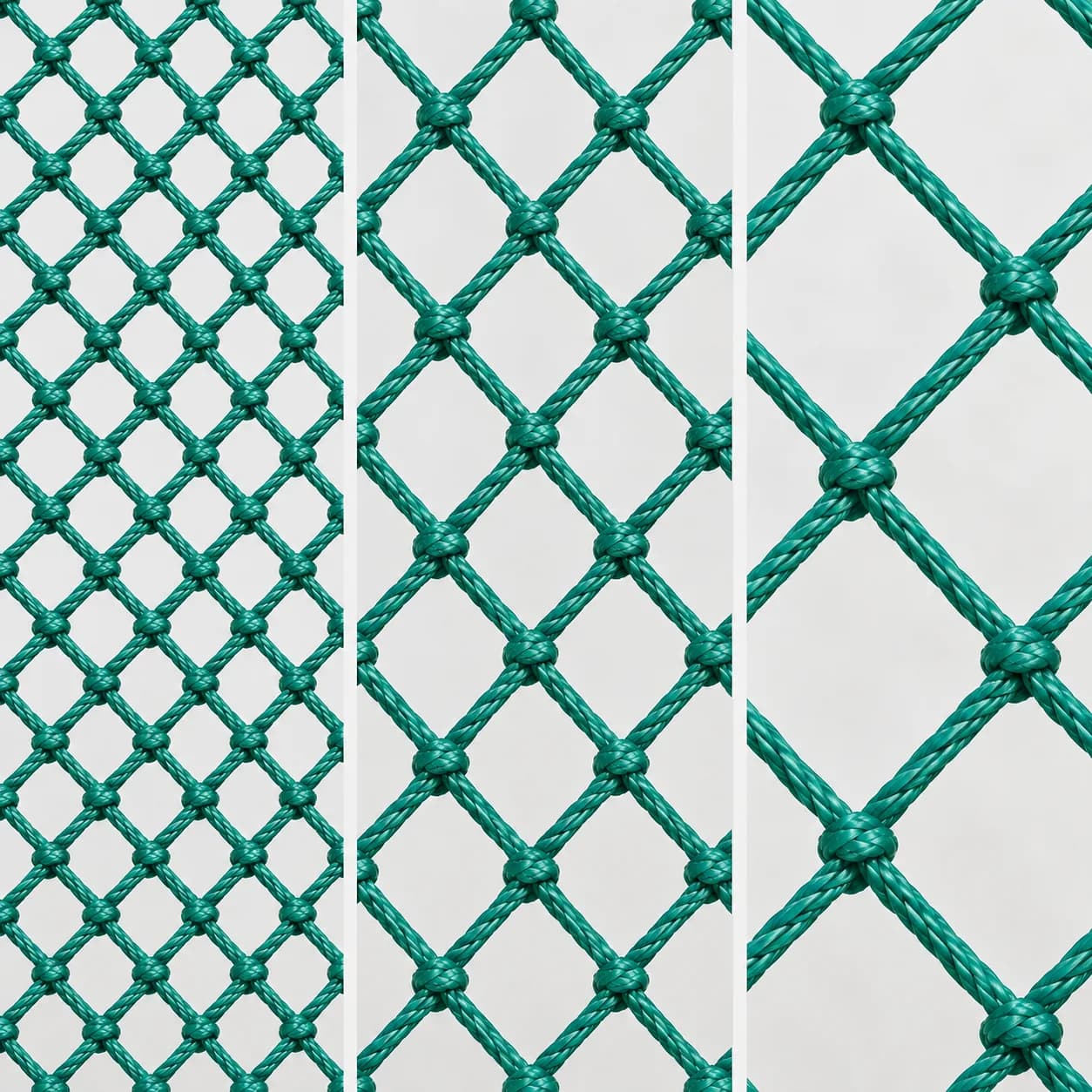
| Mesh Size | General Reference |
|---|---|
| 3/8–1 inch | Small mesh applications and small aquatic species |
| 1–2 inch | Small to medium fish applications |
| 2–4 inch | Common commercial fishing applications |
| 4–6 inch | Medium to larger fish applications |
| 6–10 inch | Large fish and specialized net applications |
These ranges are not fixed fishing standards.
The correct mesh size must be selected according to the target species, fishing technique, net design and regulations in the country or fishing area where the net will be used.
Buyers should not use a general mesh chart as a substitute for local regulatory requirements.
How to Choose the Right Fishing Net Mesh Size
When developing a fishing net specification, buyers should consider several factors together.
1. Start With the Target Fish
The expected size and shape of the target fish are important starting points.
In general, larger fish require larger mesh openings, while smaller target species require smaller openings.
For gill net applications in particular, mesh selection is closely related to the body dimensions of the target fish.
However, the final specification should be verified according to actual fishing conditions.
2. Consider the Fishing Method
Different fishing methods use netting in different ways.
A mesh specification suitable for one fishing method may perform poorly in another.
For example, gill nets, seine nets and cast nets have different operating principles.
A buyer should therefore tell the supplier not only the required mesh size but also how the finished net will be used.
Providing the fishing method can help the manufacturer recommend a more suitable combination of mesh, twine and construction.
3. Match Mesh Size With Twine Thickness
Mesh size and twine thickness should always be evaluated together.
Mesh size determines the opening dimensions, while twine thickness has a major influence on:
- breaking strength
- abrasion resistance
- net weight
- visibility
- flexibility
- water resistance
A net with the correct mesh size but unsuitable twine thickness may still fail to perform as expected.
Commercial buyers should therefore provide both mesh size and twine specification when requesting a quotation.
4. Confirm Net Depth and Length
Mesh size is only one part of the finished net specification.
Commercial fishing net buyers also need to confirm:
- net depth
- net length
- number of meshes
- stretching direction
- selvage
- knot construction
For example, depth may be specified in MD, while length may be specified in meters.
These dimensions need to work together with mesh size to produce the intended finished net.
5. Check Local Fishing Regulations
Fishing regulations often control which mesh sizes can legally be used for certain fisheries.
These rules may differ by:
- country
- region
- fishing zone
- species
- season
- fishing method
Because regulations can change, buyers should always verify the latest local requirements before confirming production.
A manufacturer can produce according to the buyer's specification, but the buyer or fishing operator remains responsible for confirming that the selected net complies with applicable regulations.
Mesh Size vs Twine Thickness
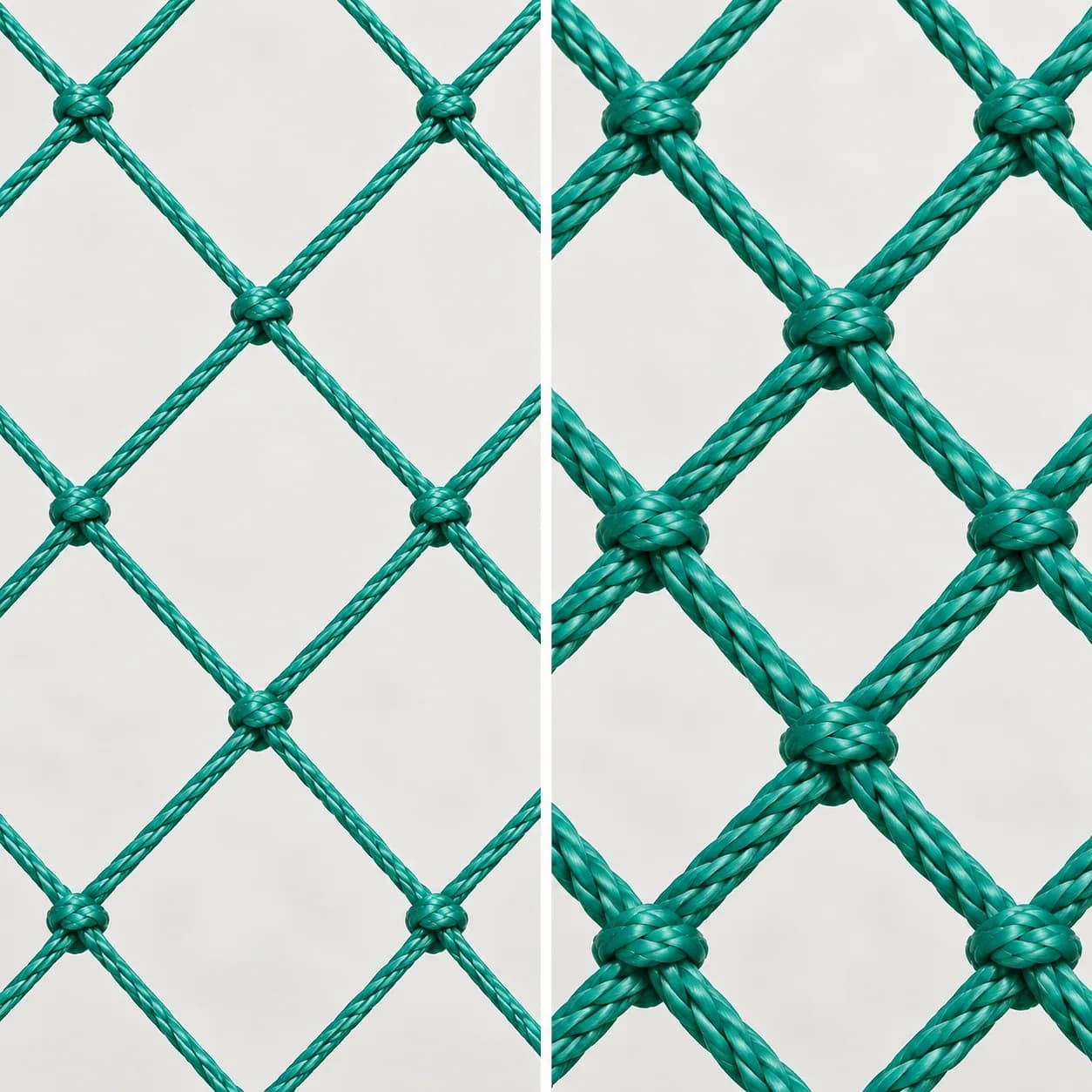
Buyers sometimes confuse mesh size with twine size, but they describe two different characteristics.
Mesh size refers to the opening of the net.
Twine thickness refers to the size and construction of the yarn used to form the netting.
For example, two nets can have exactly the same mesh opening but use very different twine specifications.
The heavier twine may provide greater strength and abrasion resistance, while the lighter twine may reduce weight and visibility.
Commercial netting can be produced in a wide range of twine specifications, including constructions based on denier and ply.
Depending on the fishing application, manufacturers may adjust twine thickness while keeping the mesh opening unchanged.
This is why professional quotations should include both parameters.
If you are also deciding between different netting materials, see our guide to monofilament vs multifilament fishing nets.
Mesh Size for Different Fishing Net Types
Different types of fishing nets require different approaches to mesh selection.
Gill Nets
Gill net mesh size is closely related to the size and body shape of the target fish.
The goal is normally to select a mesh that performs effectively for the intended species and size range.
Because local regulations for commercial gill nets can be strict, buyers should verify legal mesh requirements before ordering.
Seine Nets
For seine net applications, mesh size may vary between different sections of the finished net.
The design may also consider water flow, target species and the required retention characteristics.
Large commercial seine nets often require customized specifications rather than one standard mesh size throughout the entire net.
Cast Nets
Cast nets normally require mesh selection based on target species, sink rate and local fishing conditions.
Twine weight and overall net construction are also important because they affect how the net opens and sinks.
Aquaculture and Protection Nets
Netting used for aquaculture, anti-bird or protection applications may require a completely different mesh selection process.
Here, the goal may be containment or exclusion rather than catching fish.
For these applications, mesh size should be selected according to the size of the animals being contained or excluded, as well as strength and environmental requirements.
Buyers comparing material and construction options can also review our PE fishing nets.
Knot Type Also Matters
Mesh size alone does not determine the construction of a fishing net.
Commercial netting may be produced with:
- single knots
- double knots
- knotless construction
Each construction has different characteristics.
Double-knot netting is often selected where additional knot security is required, while knotless netting may be preferred for applications where a smoother net structure is useful.
The best choice depends on the fishing method, material, twine size and expected working conditions.
Stretching Direction: LWSF vs DWSF
Commercial net specifications may also include stretching direction.
Two common terms are:
LWSF — Length Way Stretched
DWSF — Depth Way Stretched
This describes how the netting is stretched and measured during production or use.
Buyers placing custom orders should make sure the required stretching direction is clearly stated because it can affect the finished dimensions of the net.
If the buyer is unsure, photographs, samples or an existing net specification can help the manufacturer confirm the correct construction.
Common Mesh Size Buying Mistakes
Several specification mistakes can cause problems during fishing net procurement.
Choosing Mesh Size Only by Price
A cheaper net is not necessarily suitable for the intended fishing application.
Selecting a different mesh or lighter twine only to reduce cost may change the net's performance.
Ignoring Twine Thickness
Two nets with the same mesh size can have very different strength, weight and durability.
Always confirm twine specification together with mesh size.
Failing to Confirm the Measurement Method
Mesh measurement misunderstandings are one of the easiest ways for buyers and suppliers to end up discussing different specifications.
Always confirm how the supplier measures the mesh.
Ignoring Local Regulations
A technically suitable fishing net may still be unsuitable if its mesh size does not comply with local fishing rules.
Regulations should be checked before production.
Ordering Without a Full Specification
Sending only a message such as “I need 3-inch fishing net” is usually not enough for an accurate commercial quotation.
A professional RFQ should include more information.
What Information Should Buyers Send for a Quotation?
To receive a more accurate quotation, commercial fishing net buyers should ideally provide:
- net material
- mesh size
- twine specification
- knot type
- stretching direction
- depth
- length
- color
- selvage requirements
- intended application
- required quantity
- destination country or port
Photos or samples of an existing net can also be useful when the buyer is not certain how to describe every technical detail.
If your RFQ includes unfamiliar abbreviations, use our guide to reading fishing net specifications before confirming the request.
Our commercial fishing nets can be customized according to different fishing and protection applications.
For buyers developing private-label or special specifications, see our custom fishing net specifications and OEM options.
Custom Fishing Net Mesh Sizes
Commercial fishing net projects often require custom specifications rather than standard retail sizes.
Depending on the product and application, fishing net manufacturing can support different combinations of:
- mesh size
- twine thickness
- net depth
- net length
- knot type
- stretching direction
- selvage
- color
Our available mesh range can cover approximately 3/8 inch to 10 inches depending on the net construction and technical requirements.
Other specifications can also be discussed according to the project.
For large commercial orders, it is recommended to confirm a complete specification or sample before mass production.
Frequently Asked Questions
What is the most common fishing net mesh size?
There is no single mesh size that is most common for every fishing application.
The correct size depends on the target species, fish size, fishing method, net design and local regulations.
Commercial buyers should select mesh size according to the specific fishing application rather than relying on one universal size.
How is fishing net mesh size measured?
Mesh may be measured in different ways, including knot-to-knot or stretched mesh measurements.
Because terminology can vary between markets and manufacturers, buyers should confirm the exact measurement method before ordering.
What mesh size is suitable for small fish?
Smaller fish generally require smaller mesh openings, but the correct size varies greatly between species and fishing methods.
Local regulations should also be checked before choosing a mesh size.
Does a larger mesh make a fishing net stronger?
Not necessarily.
Net strength depends heavily on twine material, twine thickness, knot construction and manufacturing quality.
A larger mesh does not automatically mean a stronger net.
Can fishing net mesh size be customized?
Yes.
Commercial fishing net manufacturers can usually produce different mesh sizes together with customized twine, depth, length, knot type and other specifications.
For OEM or wholesale projects, buyers should provide a complete specification so the manufacturer can evaluate production requirements.
Final Thoughts
Choosing fishing net mesh size should never be treated as a single-parameter decision.
The best results come from matching mesh size with the target species, fishing method, twine thickness, net construction, finished dimensions and local regulatory requirements.
For importers, distributors and commercial fishing operators, providing a complete specification also makes supplier quotations more accurate and reduces the risk of production misunderstandings.
If you are sourcing fishing nets for wholesale, commercial fishing or OEM projects, contact our team with your target mesh size, twine specification, depth, length and required quantity.
We can help review the specification and recommend suitable manufacturing options for your application.