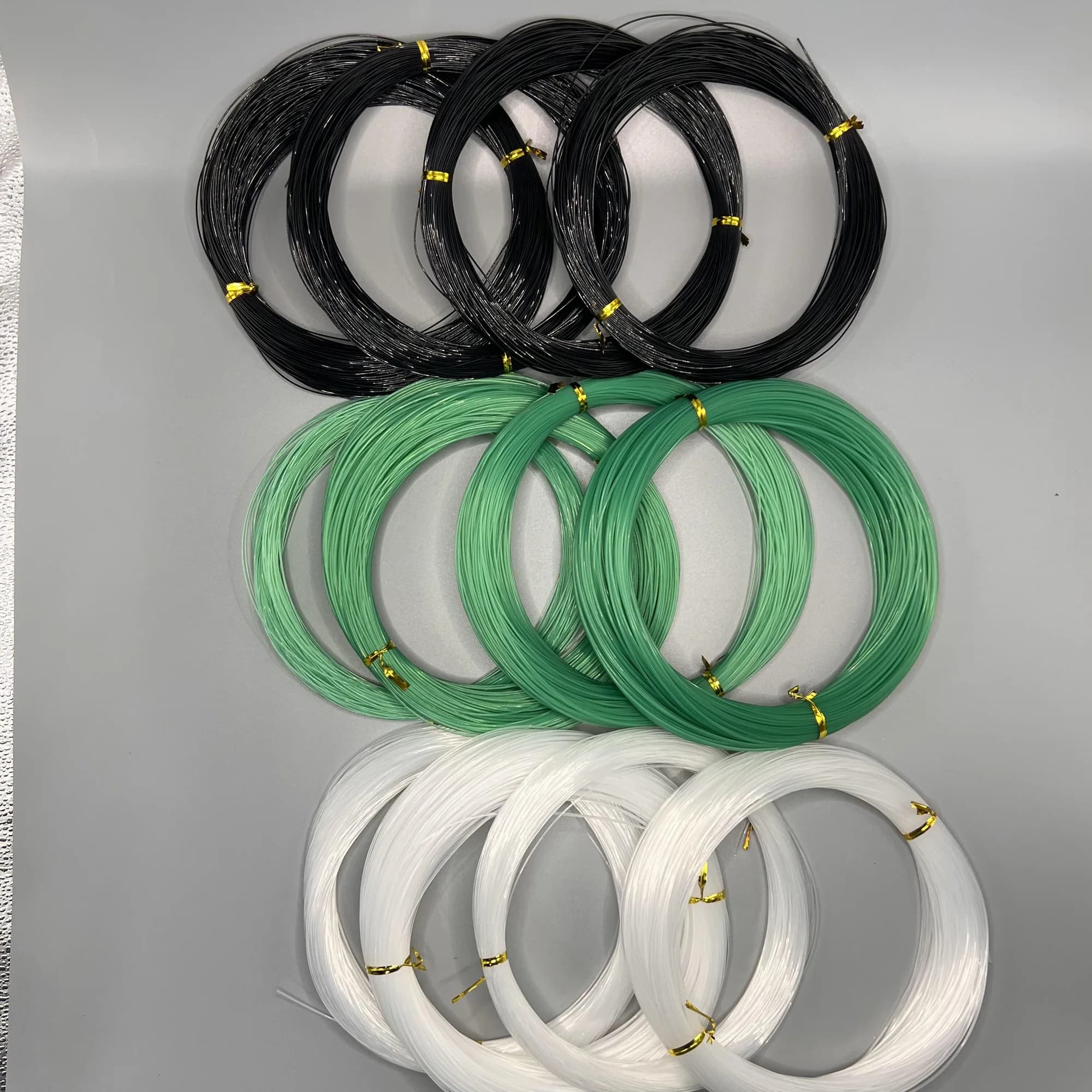
A fishing net specification is a working language between buyer and supplier. For importers, wholesalers, distributors, and commercial fishing gear buyers, a clear specification helps identify the requested product, compare quotations on the same basis, and confirm production details before an order moves forward.
The difficulty is that fishing net specifications often combine material terms, measurements, yarn constructions, knot codes, stretching directions, finished dimensions, and packing instructions in one short line. Some abbreviations are widely used, while others vary by market or supplier. A familiar-looking code can therefore be misleading when the measurement method has not been confirmed.
This buyer guide explains the main fields commonly found in fishing net specifications. It is not a universal standard or a substitute for an approved sample. When replacing an existing net, send the original specification, drawing, label, or physical sample whenever possible.
Specification Fields at a Glance
Material
Identify the agreed polymer and filament construction.
Diameter / Denier / Ply
Use the correct size notation for monofilament or multifilament products.
Mesh Size
State both the value and the agreed measurement method.
MD / Depth
Confirm the required mesh count or finished depth.
Knot
Specify SK, DK or another confirmed construction.
Stretching / Selvage
Record orientation and edge construction as separate fields.
Start With the Complete Fishing Net Specification
No single field defines a finished fishing net. Mesh size without material, line or twine size, depth, length, knot type, stretch direction, color, and packing still leaves important questions unanswered. Two nets can share one mesh measurement and remain different products because their construction or finished dimensions are different.
A practical specification normally identifies the product type first. A buyer may be sourcing netting panels, finished gill nets, replacement net sections, or another fishing-net format. The intended application also matters because it helps the manufacturer understand how the dimensions and finishing instructions relate to the final use.
Read each field as part of a system. If one value changes, check whether it affects another value. A change in mesh measurement method, for example, can alter the interpreted opening and finished dimensions even when the number printed on the inquiry remains the same.
Mesh Size and Mesh Measurement
Mesh size describes the opening formed by the netting, but buyers should not assume that every market measures it in the same way. A quoted value may refer to a stretched mesh, a measurement between specified knot points, one side of the mesh, or another locally accepted method. Units may be millimeters, centimeters, or inches.
For that reason, an RFQ should state both the numerical mesh size and the measurement method. A simple diagram showing the measurement points is useful when terminology could be interpreted in more than one way. If a sample is available, the buyer and supplier can compare the sample measurement before confirming production.
Mesh size should also be reviewed together with target species, fishing method, twine thickness, net construction, and applicable local regulations. Our Fishing Net Mesh Size Guide explains these selection factors in more detail.
Line Diameter for Monofilament Netting
Monofilament netting is commonly described by the diameter of the individual filament, often in millimeters. A diameter value is not interchangeable with a denier-and-ply construction. Buyers comparing nylon monofilament fishing nets should keep the original unit and avoid converting it into an assumed multifilament equivalent.
Diameter is only one part of the specification. Include the material, mesh size and method, depth, length, knot construction, stretch direction, color, selvage, and packing requirements. If the existing product is identified only by a local line number or trade size, provide a measured sample or the supplier's original data so the requested diameter can be confirmed.
For millimeter notation, example sizes and RFQ checks, review the monofilament line diameter guide.
Denier and Ply for Multifilament Netting
Denier is a linear-density unit used to describe yarn. In formal terms, it represents the mass in grams per 9,000 meters of yarn. In fishing-net trade descriptions, a base yarn such as 210D or 380D may be combined into a multi-ply construction.
Ply indicates how many yarn elements are combined in the stated construction. A notation such as 210D/6 and 210D/12 uses the same base denier reference but a different ply count. The notation should be read as a construction description, not as a finished-net strength guarantee. Final characteristics also depend on material, twist, knotting, finishing, mesh geometry, and the complete product design.
Likewise, 210D and 380D examples should not be compared from the number alone. Confirm how the supplier writes the construction and whether additional yarn grouping or trade terminology is involved. Buyers reviewing nylon multifilament fishing nets should provide the full notation exactly as it appears on the existing specification.
MD: Mesh Depth
MD commonly refers to mesh depth: the number of meshes counted in the depth direction of a net. It is a count, not automatically a measurement in meters. The physical hanging depth of a finished net depends on mesh size, stretch or hanging arrangement, and how the net is assembled. See fishing net MD explained for a focused guide to mesh-depth notation.
For example, a request stating only a length and “100 MD” may still require clarification about mesh measurement, stretching direction, hanging ratio, and whether the quotation is for loose netting or a finished net. State the required mesh count and, where relevant, the expected finished depth under the agreed measurement condition. Learn more about 400 MD fishing net specifications.
Net Length and Finished Dimensions
Net length may describe stretched netting length, finished hung length, a bundled product length, or another buyer-specific format. The specification should identify which condition applies. A manufacturer cannot safely infer the intended finished dimension from one length value if the stretch direction and assembly method are missing.
When dimensions are critical, include a drawing with labeled length and depth directions. Note whether measurements apply before or after finishing and whether selvage, ropes, floats, sinkers, or other components are included in the stated size. Consistent reference points make repeat-order comparisons more reliable.
SK vs DK: Knot Construction
SK generally means single knot, while DK generally means double knot. These abbreviations describe knot construction, but a buyer should still confirm the terminology with the supplier and provide a reference image when matching an existing product.
Knot choice is not an isolated quality ranking. The appropriate construction depends on material, mesh, twine or line size, finishing, application, and established market requirements. Write the required code and plain-language description together—for example, “SK, single knot”—to reduce ambiguity. For a detailed comparison, see the SK and DK knot construction guide.
SSTB vs DSTB: Selvage Instructions
In many fishing-net specifications, SSTB is used for single selvage at the top and bottom, while DSTB is used for double selvage at the top and bottom. Abbreviation practices can vary, so these codes should not be accepted without confirmation.
An RFQ should state where selvage is required, whether it is single or double, and any separate material, twine, mesh, or color requirement. If the selvage construction must match a current product, include close-up photographs of the top and bottom edges or send a sample. Our SSTB and DSTB selvage guide explains these edge instructions.
LWSF vs DWSF: Stretch Direction
LWSF and DWSF are commonly used to distinguish length-way stretched form and depth-way stretched form. The terms indicate how netting is oriented, stretched, or measured for the stated dimensions. As with other abbreviations, the precise convention should be confirmed before production.
A different stretch direction can change how a numerical length or depth is understood. Do not convert LWSF to DWSF—or recalculate dimensions—unless the mesh geometry and measurement basis are agreed. Retaining the original buyer terminology alongside a diagram is usually safer than relying on an unverified conversion. See the focused stretching-direction buyer guide for dimensional examples.
Color, Finishing, and Product Identification
Color should be described with a reference sample, agreed color code, or clear commercial description where possible. Names such as green, blue, or white may cover visibly different shades. Material and finishing can also affect the final appearance.
If dyeing, heat setting, or another finishing step is required, state it separately rather than assuming it is included in the color description. Product labels, carton marks, and private-label requirements should also be confirmed as distinct fields under the project's OEM and custom fishing net options.
Packing and Quantity / MOQ
Packing instructions can affect product presentation, handling, carton configuration, and quotation. Specify whether the netting is packed by piece, bundle, bale, spool, roll, bag, carton, or another agreed format. Include inner packing, labels, marks, and outer packing requirements when these are important to distribution.
Quantity should be written with a clear unit, such as pieces, kilograms, bundles, rolls, or a confirmed length basis. MOQ is not a universal number across all fishing nets. It may depend on product type, construction, color, packing, and other order requirements. Ask for the MOQ against the complete specification instead of assuming that one minimum applies to every product.
How to Prepare a Clear Fishing Net RFQ
A useful RFQ allows the supplier to identify what is known, what must be confirmed, and which details affect the quotation. Organize the request in a consistent order:
- Product type and intended application
- Material
- Mesh size, unit, and measurement method
- Monofilament diameter or multifilament denier/ply construction
- Mesh depth in MD and any required finished depth
- Net length and measurement condition
- Knot type, such as confirmed SK or DK terminology
- Stretch direction, such as confirmed LWSF or DWSF terminology
- Selvage construction, including confirmed SSTB or DSTB terminology
- Color and finishing requirements
- Floats, sinkers, ropes, or other components where applicable
- Packing, labeling, and private-label instructions
- Estimated quantity and unit
- Destination and any documentation requirements for review
Attach the existing specification sheet, dimension drawing, reference photographs, or sample details. Mark uncertain fields clearly rather than filling them with guesses. If you already have an existing fishing net label or sample, see our Fishing Net Specification Matching service. You can also send your fishing net specifications through our inquiry form for review.
Common Specification Errors to Avoid
Common sourcing errors include listing a mesh value without its measurement method, using denier without ply, treating MD as a metric depth, omitting stretch direction, and requesting “standard packing” without defining the expected sales unit. Another frequent problem is converting a familiar local trade size into a different system without retaining the original reference.
Use one agreed specification version for quotation, sampling, order confirmation, and inspection. If a value changes, issue a revised document rather than relying on scattered messages. A controlled specification reduces the risk that buyer and supplier review different requirements.
Frequently Asked Questions
What information is essential in a fishing net specification?
At minimum, identify the product type, material, mesh size and measurement method, line diameter or denier/ply construction, depth, length, knot type, stretch direction, color, packing, and quantity. Add selvage and component details when relevant.
Does MD mean meters of net depth?
No. MD commonly means mesh depth, expressed as a count of meshes. The resulting physical depth depends on mesh size and how the net is stretched or assembled.
Is 210D the same as a fishing-net twine size?
210D identifies a yarn denier reference, but a usable multifilament construction normally also needs a ply or other construction description. Do not quote a finished net from “210D” alone.
What is the difference between SK and DK?
SK generally refers to single knot and DK to double knot. Confirm the abbreviations and construction with the supplier, especially when matching an existing net.
Why must LWSF or DWSF be stated?
The stretch direction affects how net dimensions are interpreted. Stating the original convention helps prevent length and depth from being calculated or oriented on the wrong basis.
How should a buyer confirm an unfamiliar abbreviation?
Keep the original abbreviation, add a plain-language explanation, and provide a drawing, photograph, or sample. Ask the supplier to repeat the interpreted specification before production.
Can one MOQ apply to every fishing net specification?
No universal MOQ should be assumed. The applicable minimum may depend on product construction, color, packing, and order requirements, so it should be confirmed against the complete RFQ.
Final Specification Check
Before approving a quotation or sample, read the specification as one complete product description. Confirm every unit, abbreviation, measurement condition, and packing instruction. Where local terminology differs, preserve the original reference and add a diagram or sample instead of relying on an unverified conversion.
A clear RFQ does not need to be complicated. It needs to be consistent, measurable, and explicit about any point that still requires confirmation.