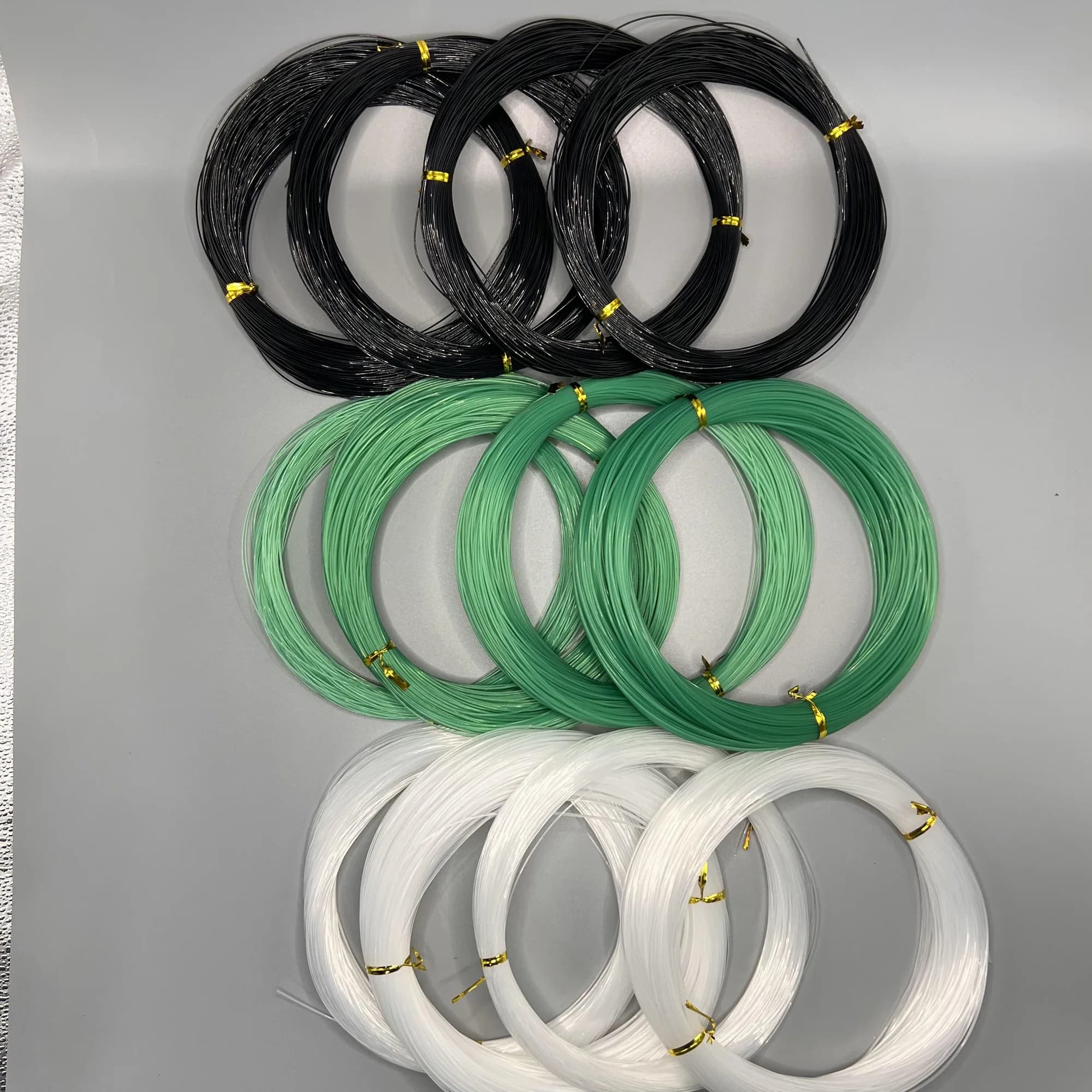
LWSF and DWSF are short specification codes that can change how a buyer and supplier understand the dimensions of fishing netting. For importers, wholesalers, and commercial fishing gear buyers, leaving stretching direction unconfirmed can lead to a net panel being measured, oriented, packed, or assembled differently from the product expected.
This guide focuses specifically on LWSF vs DWSF fishing net terminology. It explains how lengthway stretching and depthway stretching relate to mesh geometry, mesh depth, stated length, and finished dimensions. The terms should always be confirmed with the manufacturer because trade conventions and abbreviations can vary. A drawing or approved sample is safer than relying on a code alone.
LWSF
Lengthway Stretching presents or measures the netting along its length direction.
DWSF
Depthway Stretching presents or measures the netting along its depth direction.
What Does LWSF Mean?
LWSF means Lengthway Stretching. In a typical commercial specification, it indicates that the netting is stretched or presented in its length direction when the stated dimensions or packing form are considered. The diamond meshes narrow across the depth while extending along the length.
LWSF does not by itself state the finished hung length, hanging ratio, mesh size, or number of meshes deep. It identifies orientation. A complete LWSF fishing net specification must still define which measurement is taken under full stretch, which dimension is a mesh count, and whether the order is loose netting or a mounted finished net.
Buyers often encounter lengthway form when netting is supplied as a long panel or bundle intended for later assembly. That is only a common handling format, not a rule for every product. The purchase description should retain the supplier-approved definition used for the actual order.
What Does DWSF Mean?
DWSF means Depthway Stretching. It indicates that the netting is stretched or presented in the depth direction. Under this orientation, the diamond meshes extend vertically across the depth and contract along the perpendicular direction.
A DWSF fishing net can contain the same mesh construction as netting described in another orientation, but its stated dimensions must be interpreted on the agreed axes. DWSF does not automatically tell the buyer the practical hanging depth after rigging. Finished depth depends on mesh geometry, mesh count, hanging arrangement, and any assembly instructions.
Depthway form may be requested for a buyer's cutting, handling, mounting, or packing process. The reason should be communicated when it matters, especially if the supplier is expected to convert a previous LWSF order into DWSF or vice versa.
Lengthway vs Depthway Stretching
A diamond mesh changes shape as force is applied along one diagonal. Stretch it along one direction and that diagonal becomes longer while the other becomes shorter. Rotate the working direction and the relationship reverses. The material has not necessarily changed, but the apparent length and depth of the panel do.
This is why a net cannot be described safely by two meter measurements without stating the condition under which they were taken. A loose panel, fully stretched panel, normally opened panel, and mounted net can all show different dimensions. Stretching direction also should not be confused with mesh measurement method: the buyer must define both.
When replacing an existing net, mark the top, bottom, length, and depth directly on a photograph or drawing. Include an arrow showing the stretch direction. This simple reference prevents the parties from rotating the panel mentally and assigning the wrong value to length or MD.
How Stretching Direction Affects Net Dimensions
Netting mesh is flexible geometry rather than rigid sheet material. A long fully stretched dimension along one diagonal is paired with a reduced dimension across the other diagonal. Therefore, the two fully stretched dimensions are not normally achieved at the same time.
If a quotation lists “100 m × 100 MD,” the buyer should ask whether 100 m is lengthway stretched, a finished hung length, or another agreed measurement. The mesh-depth count remains a count of mesh openings, but the physical depth in meters changes with how open the meshes are. Conversely, a required finished depth does not reveal the number of meshes unless mesh size and mounting geometry are known.
Do not use a universal conversion factor between LWSF and DWSF. Conversion requires the actual mesh geometry, count, and measurement condition. It may also require allowances for knots, finishing, selvage, and assembly. Ask the supplier to show the interpreted dimensions in a simple diagram before approving a converted specification.
MD, Mesh Size, and Finished Net Dimensions
MD means mesh depth: the number of meshes counted in the depth direction. It is not automatically meters, centimeters, or feet. A value such as 100 MD states a count, while its stretched or mounted physical depth depends on the confirmed mesh specification and orientation.
Mesh size itself may be expressed as stretched mesh, bar length, knot-to-knot distance, or another market convention. State the value, unit, and fishing net mesh measurement method. If the supplier reads a half-mesh value as full stretched mesh, the dimensional error will be more significant than the choice of LWSF or DWSF wording.
A finished gill net adds another layer: the netting is mounted to ropes with an agreed hanging arrangement, and floats, sinkers, or selvage may be included. The practical finished dimensions of commercial gill nets should be specified separately from the dimensions of the loose netting panel.
LWSF vs DWSF Comparison
The table summarizes the questions a buyer should confirm. It is a terminology guide, not a universal manufacturing standard.
| Field | LWSF | DWSF |
|---|---|---|
| Meaning | Lengthway Stretching | Depthway Stretching |
| Primary stretched direction | Along the stated netting length | Along the stated netting depth |
| Mesh appearance | Extended lengthwise, narrower across depth | Extended depthwise, narrower across length |
| Physical dimensions | Must state whether length is fully stretched or finished | Must state whether depth is fully stretched or finished |
| MD | Still a mesh count; physical depth requires clarification | Still a mesh count; stretched depth requires clarification |
| Buyer confirmation | Code, axis drawing, measurement condition, mesh method, and finished dimensions | |
Material and Construction Do Not Define Direction
Stretching direction is separate from material and yarn construction. Both nylon monofilament netting and nylon multifilament fishing nets can require an orientation instruction. The correct notation depends on the buyer's established specification and the supplier's supported production and packing method.
Knot type is also independent. SK or DK describes the mesh junction, while LWSF or DWSF describes direction. Buyers who need to confirm both can review our SK vs DK fishing net guide. Place each code in its own RFQ field rather than combining several abbreviations into an unexplained string.
Common Applications and Purchasing Situations
LWSF or DWSF may appear in specifications for loose netting panels, gill-net netting, replacement sections, or panels intended for further assembly. The code can also matter to distributors whose customers expect netting to unfold, cut, or mount in a familiar direction.
For repeat orders, preserve the orientation used by the approved product even when the numerical mesh and yarn fields are unchanged. For a new project, tell the supplier how the netting will be assembled and which finished dimension matters. For private-label products, confirm whether packing labels must display the orientation or dimensions in a buyer-specific format.
Orientation alone does not determine suitability for a target species or fishing method. Local regulations, mesh requirements, net design, hanging, components, and operating conditions still govern the finished product. Treat LWSF or DWSF as one controlled field within the complete technical description.
Common RFQ Errors
A frequent error is copying “LWSF” from an old invoice while providing dimensions measured from a mounted net. Another is stating a depth in meters without the MD count, mesh method, or hanging condition. Buyers also sometimes request conversion to DWSF without explaining which finished dimension must remain unchanged.
Avoid sending an unlabeled rectangle with two values. Label length, depth, top, and bottom; show the stretch arrow; distinguish mesh count from metric dimension; and identify loose-netting dimensions separately from mounted-net dimensions. If a sample is available, record how it was relaxed or stretched during measurement.
How to Specify LWSF or DWSF in an RFQ
Write the abbreviation and its meaning together: “LWSF — Lengthway Stretching” or “DWSF — Depthway Stretching.” Ask the supplier to confirm the orientation on the quotation. A complete RFQ should then include:
- Product type and intended application
- Material and monofilament diameter or multifilament denier/ply
- Mesh value, unit, and measurement method
- Length and the condition in which it is measured
- Depth as MD, plus any required finished depth
- LWSF or DWSF with a labeled orientation drawing
- Knot, selvage, color, finishing, and components where applicable
- Packing format, quantity, and sales unit
The broader fishing net specification guide explains the other fields. When top and bottom edges must also be identified, use the separate SSTB and DSTB selvage guide. For buyer-specific dimensions, packaging, or private label, provide the controlled specification through our OEM fishing net options.
Simple Purchasing Specification Examples
These are formatting examples only, not recommended product configurations or stock specifications.
Loose monofilament netting: PA monofilament; diameter [confirmed value]; mesh [value, unit, method]; DK; length [value] measured LWSF — Lengthway Stretching; depth [count] MD; color [reference]; selvage [instruction]; packing [format].
Loose multifilament netting: nylon multifilament [denier/ply]; mesh [value, unit, method]; SK or DK [confirmed]; DWSF — Depthway Stretching; depth [count] MD / stretched depth [value under agreed condition]; length [value and condition]; color and packing [confirmed].
Finished gill net: first specify the loose netting fields and orientation; then separately state hung length, finished depth, hanging arrangement, ropes, floats, sinkers, selvage, and packing. This separates panel geometry from the assembled product.
Frequently Asked Questions
Is LWSF the same as finished net length?
No. LWSF identifies lengthway stretching. The stated length may be fully stretched, normally stretched, or finished depending on the specification. The buyer must name the measurement condition.
Does DWSF change the mesh size?
It changes the direction in which the mesh is extended, not necessarily the specified mesh construction. Confirm the mesh measurement method and orientation because the apparent opening changes as the diamond mesh changes shape.
Can LWSF dimensions be converted directly to DWSF?
Not with one universal ratio. A reliable conversion requires mesh geometry, counts, measurement conditions, and the finished dimensional requirement. Ask for a labeled supplier drawing before approval.
What does MD mean in a DWSF specification?
MD remains mesh depth, a count of meshes in the identified depth direction. It should not be read automatically as a metric depth.
Which stretching direction is better for gill nets?
Neither code is universally better. Use the orientation required by the established panel, assembly process, finished dimensions, and buyer market. Confirm hanging details separately.
How can a buyer avoid an orientation mistake?
Write the code and full term, label length and depth on a drawing, add a stretch arrow, state mesh and MD conventions, and ask the supplier to repeat the interpreted dimensions in the quotation.
Confirm Direction Before Production
An effective stretching-direction specification does more than add four letters to an order. It connects LWSF or DWSF to labeled axes, mesh size, MD, measurement conditions, finished dimensions, and packing. Keeping those references consistent from RFQ through sample approval and production helps buyers compare equivalent quotations and avoid rotated or misinterpreted net panels.