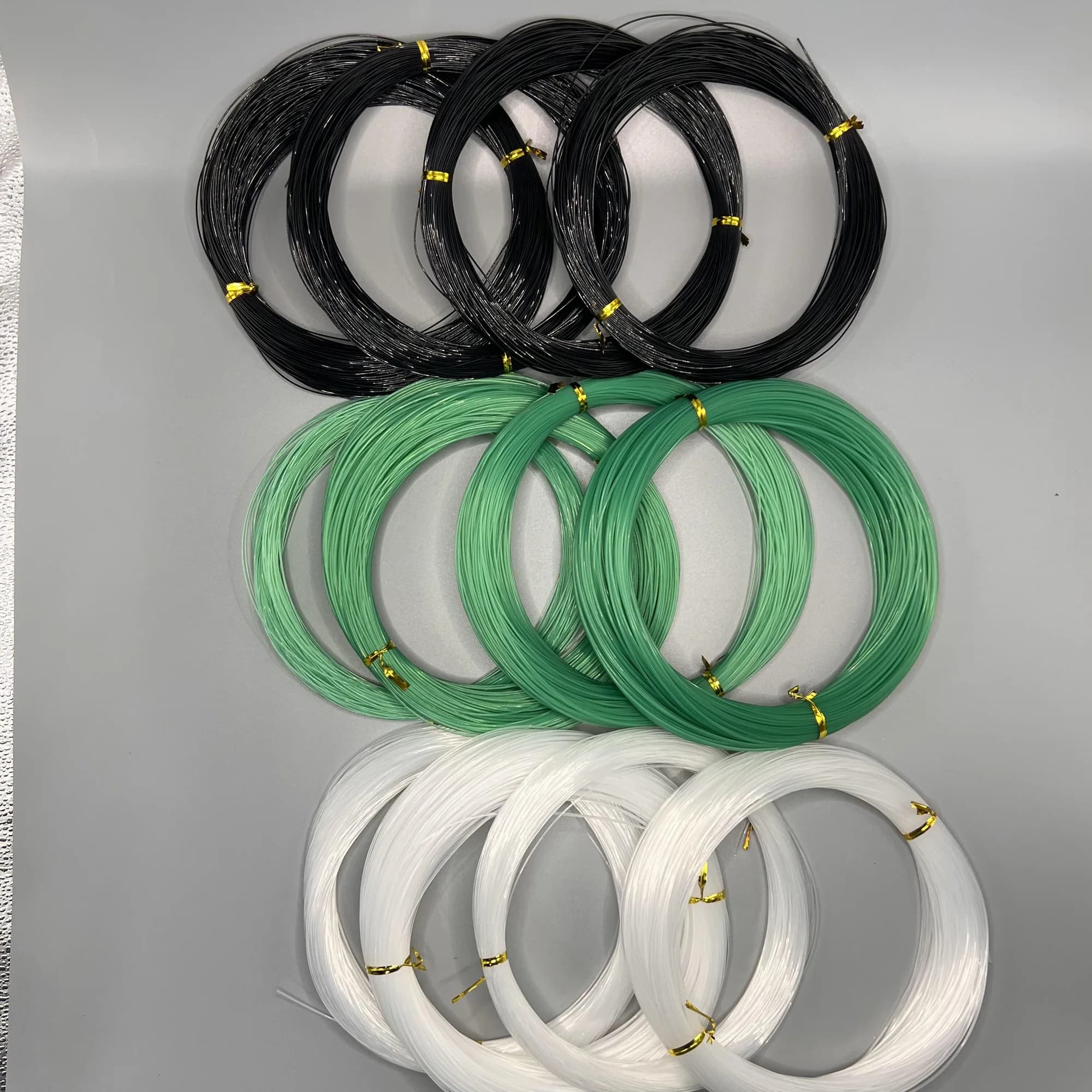
For importers, wholesalers, and commercial fishing gear distributors, fishing net knot types are part of the product specification, not simply a preference for appearance. A change from single knot to double knot can affect the junction between mesh bars, the amount of yarn used, handling, and the quotation. Buyers should therefore confirm knot construction before comparing offers or approving repeat orders.
This guide explains SK and DK in knotted netting and how to describe them in an RFQ. Neither code alone proves that a net will meet a particular strength or service requirement. Material, filament or twine size, mesh measurement, finishing, and assembly must be reviewed together. An approved sample remains useful when matching an established market product.
Single Knot (SK)
A single netting-knot construction at each mesh junction.
Double Knot (DK)
A junction with an additional turn or locking element in the confirmed construction.
What Do SK and DK Mean?
SK means Single Knot and DK means Double Knot in the fishing-net specifications discussed here. They describe the construction at the mesh junction. They do not describe whether the netting uses one filament or several yarn elements: monofilament versus multifilament is a separate material-construction field.
Trade abbreviations are not a complete drawing. Confirm the supplier's interpretation by writing both the code and its plain-language meaning, then attaching a clear knot close-up or sample. Do not confuse these mesh junctions with knots used to attach ropes, join net panels, or secure a hand line. Those connections need their own instructions.
Single Knot Construction
A single knot fishing net uses a single netting-knot construction at each junction. Common knotted netting uses a weaver's or sheet-bend-type junction, although the exact machine-made structure should be confirmed. The knot holds the adjoining mesh bars in position and forms part of the measured netting geometry.
For otherwise comparable netting, a single junction generally uses less yarn and creates a smaller knot than its double-knot counterpart. Buyers may consider it when their established specification calls for a relatively compact junction. However, a small knot is not evidence of adequate security: yarn surface, knot tightening, and finishing influence whether the junction remains stable during handling and use.
Double Knot Construction
A double knot fishing net adds an additional turn or locking element to the netting junction, depending on the confirmed construction. It should not be interpreted as two separate meshes or twice the number of mesh openings. The purpose of the additional structure is to improve knot security where a single construction may be more prone to movement.
DK usually forms a bulkier junction and consumes more yarn when other variables are held constant. This can change netting weight and cost. It does not mean twice the breaking strength, nor does it remove the need to inspect knot consistency. Request a sample representing the actual material, line or twine size, and finishing rather than judging a different construction from photographs alone.
SK vs DK: A Buyer's Comparison
The comparison below describes general construction considerations, not guaranteed performance or fixed commercial differences. Compare samples with the same material, yarn size, mesh, dimensions, and finishing before drawing conclusions.
| Factor | Single knot / SK | Double knot / DK |
|---|---|---|
| Junction | Single netting-knot construction | Additional turn or locking element |
| Knot security | Must suit yarn and finishing | Often selected to reduce knot movement |
| Knot bulk | Generally smaller in a like-for-like comparison | Generally larger in a like-for-like comparison |
| Weight | Generally lower yarn consumption | Additional yarn can increase weight |
| Cost | Confirm against complete specification | Additional material or production requirements can affect price |
| Strength | No strength value follows from the code alone | Not automatically stronger in every test or application |
Strength and Stability Are Different Questions
Strength concerns the load a filament, twine, knot, or netting specimen withstands under a defined test. Stability concerns whether the junction moves, loosens, or changes the mesh geometry. A buyer can need both, but should not treat them as the same property.
Ask which specimen is tested and whether the result applies to dry or wet material, straight yarn or knotted yarn, and a single junction or netting strip. Agree the test method and acceptance requirement before requesting comparative results. Without matching conditions, two reported breaking loads may not support a useful purchasing decision.
During sample review, examine consistent knot formation and mesh dimensions as well as the agreed test results. Do not substitute an informal hand pull for a specified inspection method. The knot code is an instruction for construction, not a certified performance rating.
Weight, Handling, and Cost
Additional yarn at every junction accumulates across a panel. The effect on finished weight depends on mesh count, yarn size, and construction; there is no universal percentage increase for DK. A heavier junction may also change how bundled netting feels and packs, so review the sales unit and handling requirements with the sample.
For quotation comparison, keep length, depth, mesh measurement, SSTB or DSTB selvage construction, color, and packing identical. A price per kilogram and a price per finished piece answer different questions. Ask for the agreed unit and packing basis rather than assuming that the lower unit price means a lower cost for an equivalent net.
Which Knot Suits Monofilament, Multifilament, and Gill Nets?
Monofilament netting
A smooth individual filament requires attention to knot security. DK is often considered for this reason, but the buyer should confirm suitability for the actual diameter, material, and finishing. FAO's bottom-gillnet training guide recommends double knots for hand-braided monofilament; this is practical context, not a universal specification for every manufactured net.
When sourcing nylon monofilament netting, retain the knot requirement from the approved existing product. If proposing a change, compare representative samples instead of accepting a generic claim that either knot is always better.
Multifilament netting
Multifilament twine combines multiple yarn elements. Its construction and surface differ from a single filament, but that does not make knot selection automatic. For nylon multifilament fishing nets, state denier and ply alongside SK or DK and confirm twist, finishing, and sample requirements where relevant.
Finished gill nets
A gill net is an application and assembly format, not a separate knot type. Buyers of commercial gill nets must specify netting construction together with hung dimensions, ropes, floats, sinkers, and selvage where required. Choose the knot within the complete design and local fishing requirements, not from the product name alone.
How to Specify SK or DK in an RFQ
Write “SK — Single Knot” or “DK — Double Knot” as a separate field. Provide a junction close-up with enough detail to show the yarn path. If the code on an old label is unclear, mark it for confirmation rather than guessing from a distant product photograph.
- Identify netting panels or finished nets and intended use.
- State material, filament diameter or denier/ply, and mesh measurement method.
- Specify knot code and plain-language construction.
- Include depth, length, stretch direction, selvage, and finishing.
- State color, packing, quantity unit, and any agreed inspection requirements.
Our guide to reading fishing net specifications explains how these fields fit together, while the mesh-size buyer guide covers the measurement field that accompanies knot construction. For custom and OEM netting requirements, identify which fields are fixed and which can be reviewed. Require written approval before a supplier substitutes a different knot.
A Simple Specification Example
The following is a format example, not a recommended fishing setup, available inventory, or performance claim. Replace each bracketed field with the buyer's confirmed requirement.
Nylon multifilament netting; construction [denier/ply]; mesh [value, unit, measurement method]; DK — Double Knot, matching approved sample; depth [mesh count]; length [value and measurement condition]; stretch [confirmed direction]; selvage [instruction]; color [reference]; packing [sales unit]; quantity [amount and unit].
For monofilament, replace denier/ply with filament diameter. For a finished gill net, add assembly instructions and finished dimensions. Keep the approved document revision attached to the quotation and purchase order so SK cannot be substituted for DK through an abbreviated description.
Frequently Asked Questions
Does DK mean double the strength of SK?
No. DK identifies construction, not a strength multiplier. Compare agreed test results for equivalent yarn, mesh, finishing, and test conditions. Better knot security does not establish a universal breaking-load advantage.
Can an SK fishing net use multifilament twine?
Yes, single knot and multifilament describe different specification fields. Confirm the supported construction and complete yarn notation with the supplier, then approve a representative sample.
Should every monofilament order specify DK?
Do not replace an established specification automatically. Double knots are commonly considered for knot security with smooth filament, but the appropriate order requirement depends on the actual net construction and approved sample.
Can I identify SK or DK from a product card image?
Usually not reliably. Request a close-up showing individual junctions, or inspect a sample. A general image may show the product format without enough detail to distinguish the knot path.
Will changing knot type change mesh size?
The nominal mesh can remain specified, but junction bulk and measurement points matter. Confirm the measurement method and finished dimensions after the change rather than assuming every geometric detail remains identical.
How should wholesalers compare SK and DK quotations?
Use one specification with knot type as the clearly identified difference. Keep material, yarn construction, mesh, dimensions, finishing, packing, and quantity basis aligned, then review samples and the quoted sales unit.
Confirm the Junction Before Confirming the Order
A useful knot specification combines the abbreviation, plain-language construction, and an agreed reference. Keep SK or DK visible throughout quotation, sampling, order confirmation, and inspection. If the same RFQ includes dimensional orientation, confirm it separately with the LWSF and DWSF specification guide. This helps overseas buyers compare equivalent products without relying on unsupported strength claims or an assumed supplier standard.